
Fewer falls and lighter nursing workload with QUMEA, new study finds
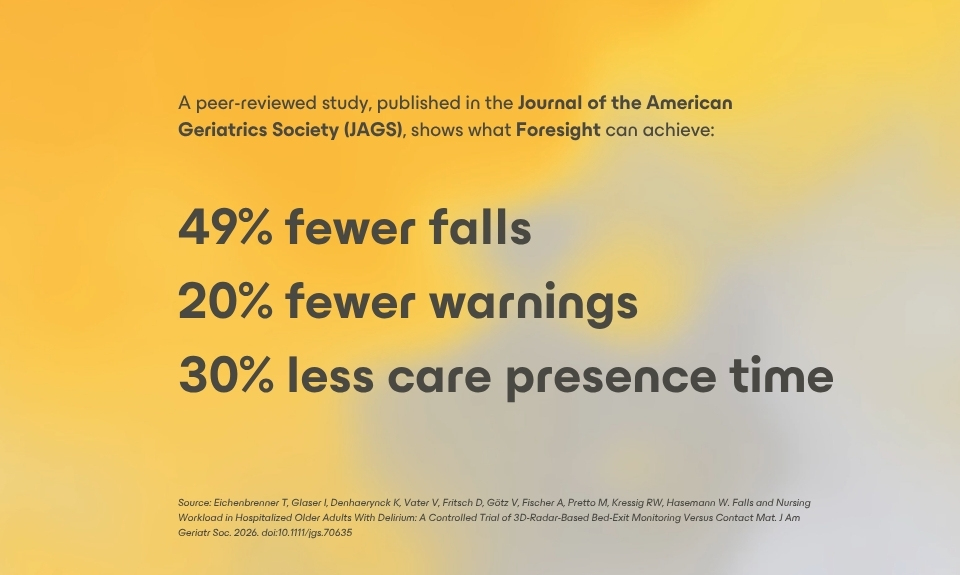
A peer-reviewed study, published in the Journal of the American Geriatrics Society (JAGS), shows: fewer falls and a lighter nursing workload with QUMEA in delirium care. The prospective, controlled study, conducted at the University Center for Geriatric Medicine Felix Platter in Basel, put foresight to the test in one of Europe’s most demanding clinical settings for delirium care. The result: QUMEA’s contactless, radar-based monitoring was associated with substantially fewer falls and a lighter nursing workload related to bed-exits than a conventional contact mat, evidence that seeing risk earlier can protect both patients and the teams caring for them, without compromising dignity.
Falls remain one of the most persistent risks in hospital care, particularly for older adults with delirium, one of the most vulnerable patient groups in any care setting. Yet most published fall rates rely on subjective incident reports rather than independently verified data, making it hard to know how well any given approach performs once real patients, real nights, and real workloads are involved.
To bring evidence to this question, researchers looked at how two different approaches to sensing bed-exit risk performed on a specialised delirium care unit, the only ward of its kind in Europe. Over nearly 1,800 patient days, every fall was independently verified through four separate sources rather than incident reports alone, a rare degree of rigour for this kind of research.
The pattern that emerged was clear. A 49% lower rate of bed-exit-related falls: 11.5 vs. 22.6 falls per 1,000 patient days where QUMEA’s radar-based sensing was in place, a difference that remained statistically significant after adjusting for baseline differences between groups (adjusted OR 3.76, 95% CI 1.25–11.27, p=0.019).
Care teams were also alerted with more precision and spent less time responding. 20% fewer bed-exit warnings: 9,760 vs. 12,255 per 1,000 patient days (adjusted OR 1.89, 95% CI 1.41–2.53, p<.001). And 30% less time spent on issues related to bed-exits: nurse presence time was a median 16.3 vs. 23.2 minutes per patient day (adjusted OR 1.60, 95% CI 1.21–2.11, p=0.001). Less noise, more attention where it matters.
The study was independently funded by the Velux Foundation, Zurich, and its authors declare no conflicts of interest. Throughout, no cameras and no personal data were involved, reflecting Dignity by Design rather than an afterthought. Taken together, the findings suggest that seeing risk earlier can protect patients, without having to trade dignity for safety.
From Switzerland to Iceland: QUMEA Welcomes its 100th Hospital
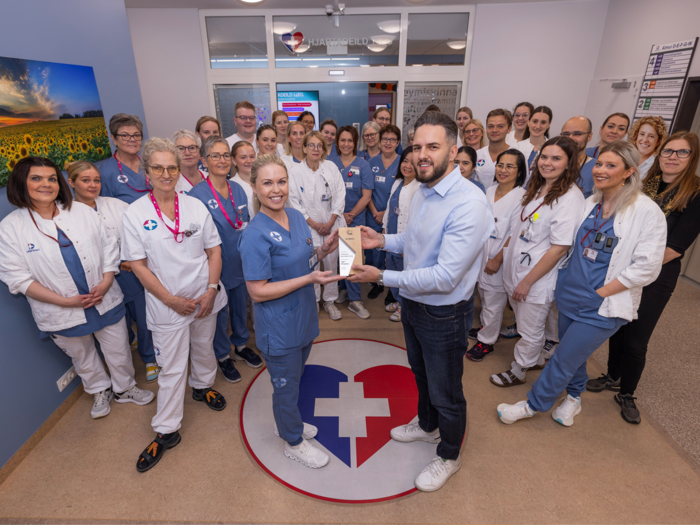
Landspítali, Iceland’s national university hospital, has become the 100th hospital to implement QUMEA’s radar-based digital mobility monitoring system.
Together with the Landeskrankenhaus Hall | Tirol Kliniken GmbH: An authentic glimpse into everyday nursing care
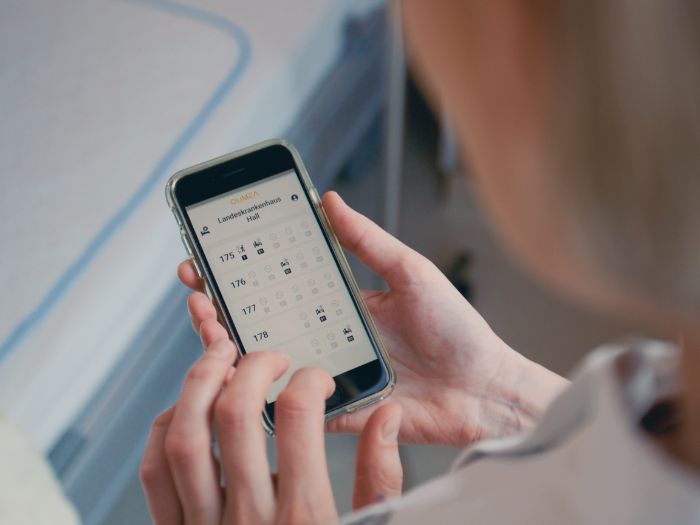
An authentic glimpse into clinical daily life shows how QUMEA supports nursing professionals. The anonymous, contactless technology creates more safety without unnecessarily interrupting daily care routines, while consistently protecting data privacy and confidentiality.
VGR and QUMEA: An interview on one of Europe's largest radar projects
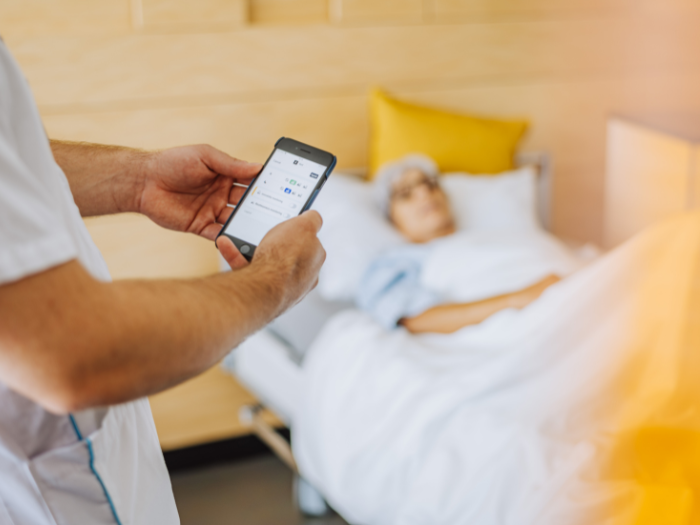
Falls in hospitals rarely happen without warning. The changes that precede them, in mobility, in restlessness, in how a patient moves through the night, often go unnoticed between routine checks. This is the gap the Västra Götaland Region (VGR) set out to close when it began one of the largest publicly tendered movement monitoring projects in Europe.